Artesans-ResQ Ukraine: May 2026
In May, we continued to prioritize high-acuity critical care transport, with all patients requiring ICU 2–3 level support. Demand for pediatric, neonatal, and long-distance transfers remained high, while the team also maintained burn and targeted evacuation capacity, including joint missions with our partners.
May 2026 Highlights
33 missions completed: intensive care support (ICU levels 2 and 3) was required for all patients (100%)
In total, 7 pediatric and 4 neonatal cases were successfully transported, continuing an upward demand trend
7 burn patients successfully evacuated
12 long-distance transfers and 10 targeted evacuations were completed,
with 4 joint missions implemented in close cooperation with the Ministry of Health of Ukraine MCUTotal transportation time: 389 hours and 15 minutes
Total distance covered by our team in April: 34,176 km
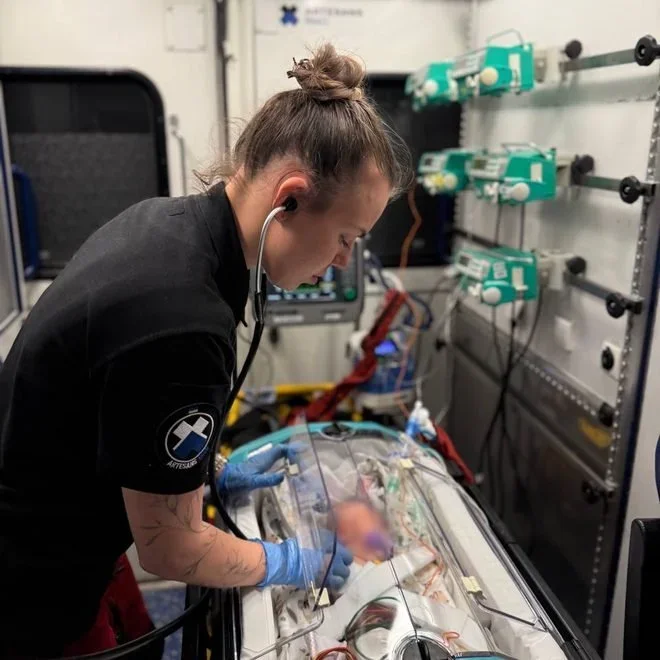
Case Study #1
In May, ARQ safely transported two critically ill young patients:
A one-day-old newborn on mechanical ventilation from Kropyvnytskyi to Dnipro
A, seven7-month-old patient weighing 4 kg from Dnipro to Okhmatdyt.
Both patients were transferred successfully with continuous clinical monitoring and appropriate intensive care support throughout transport.
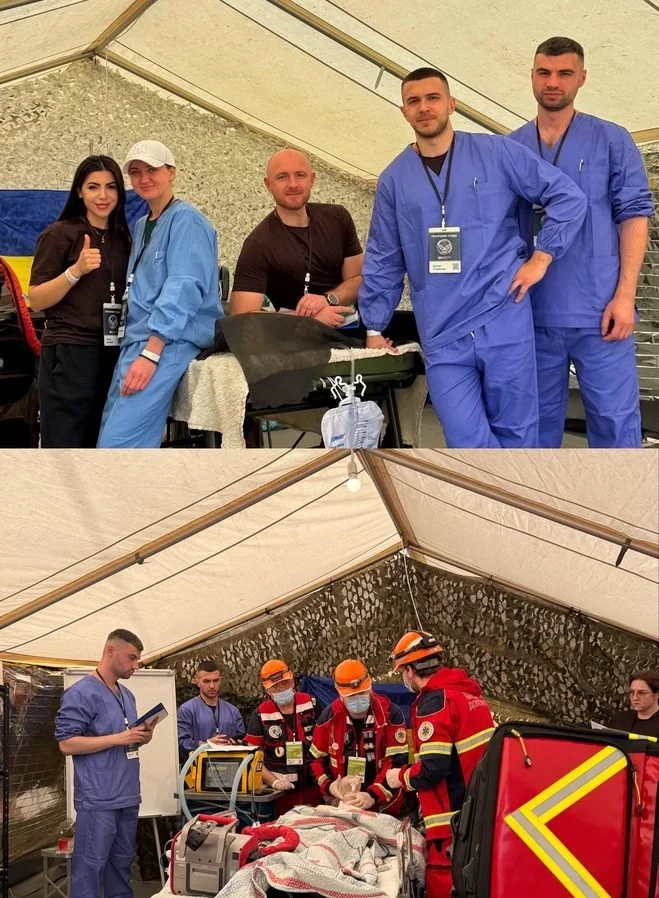
Case Study #2
In May, ARQ team took part in the 12th international Ukrainian EMS Championship, “Vinnytsia Medical Rally 2026”, serving as judges and running a CCT simulation stations based on real emergency care conditions.
The event brought together 29 teams from Ukraine, Poland and Lithuania to practice mass-casualty response, adult and pediatric care, CPR, critical patient transport, interagency coordination, and work under limited resources.
ARQ’s participation supported practical learning and peer exchange within Ukraine’s EMS community.
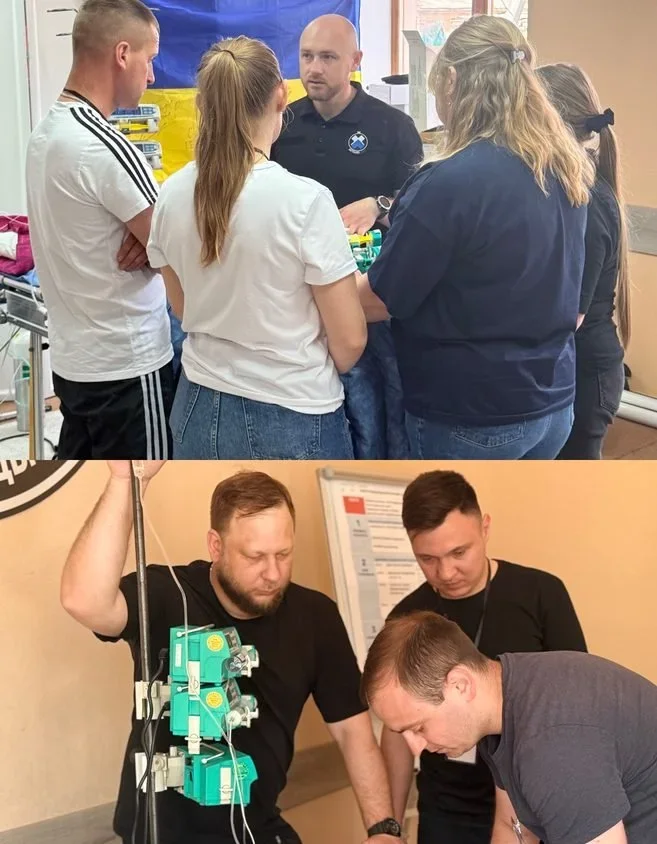
Case Study #3
From 25–27 May and 28–30 May, ARQ delivered two Critical Care Transport (CCT) training courses in Kropyvnytskyi for 40 medical professionals involved in Medevac program and targeted evacuations.
The programme combined theoretical instruction with intensive practical exercises covering patient stabilization, airway and ventilation management, vascular access techniques, vasoactive medications, pain management, sedation, and structured clinical assessment.
Through interactive workshops and simulation-based training, participants strengthened the skills required for the safe transport of critically ill patients.
We thank the Center of Disaster Medicine of the Ministry of Health of Ukraine for its effective cooperation in ensuring the safe transport of critically ill patients.
We also express our gratitude to the World Health Organization and the Ministry of Health of Ukraine for their continued support and coordination, and to everyone who contributes to our work, as well as to the Kropyvnytskyi EMS Center for its support in organizing the training courses.
Together, we can do more!